Use cases
>
Heavy Manufacturing

Building Materials & Drywall

Share this page
Tags
Manufacturing
Material processing

Gypsum dust control is hard in drywall plants because the dust is fine and light, and every step makes more of it. Calcining, board cutting, edge trimming and bundling release dust, edge scraps, paper trim and packaging. Forklifts spread it from the board line to the warehouse, and a push broom lifts much of it back into the air.

OSHA's exposure limits for calcium sulfate (gypsum) dust are 15 mg/m³ total and 5 mg/m³ respirable over an 8-hour shift. Where crystalline silica is present, OSHA's silica standard (29 CFR 1910.1053) restricts dry sweeping unless wet methods or HEPA vacuuming are not feasible.

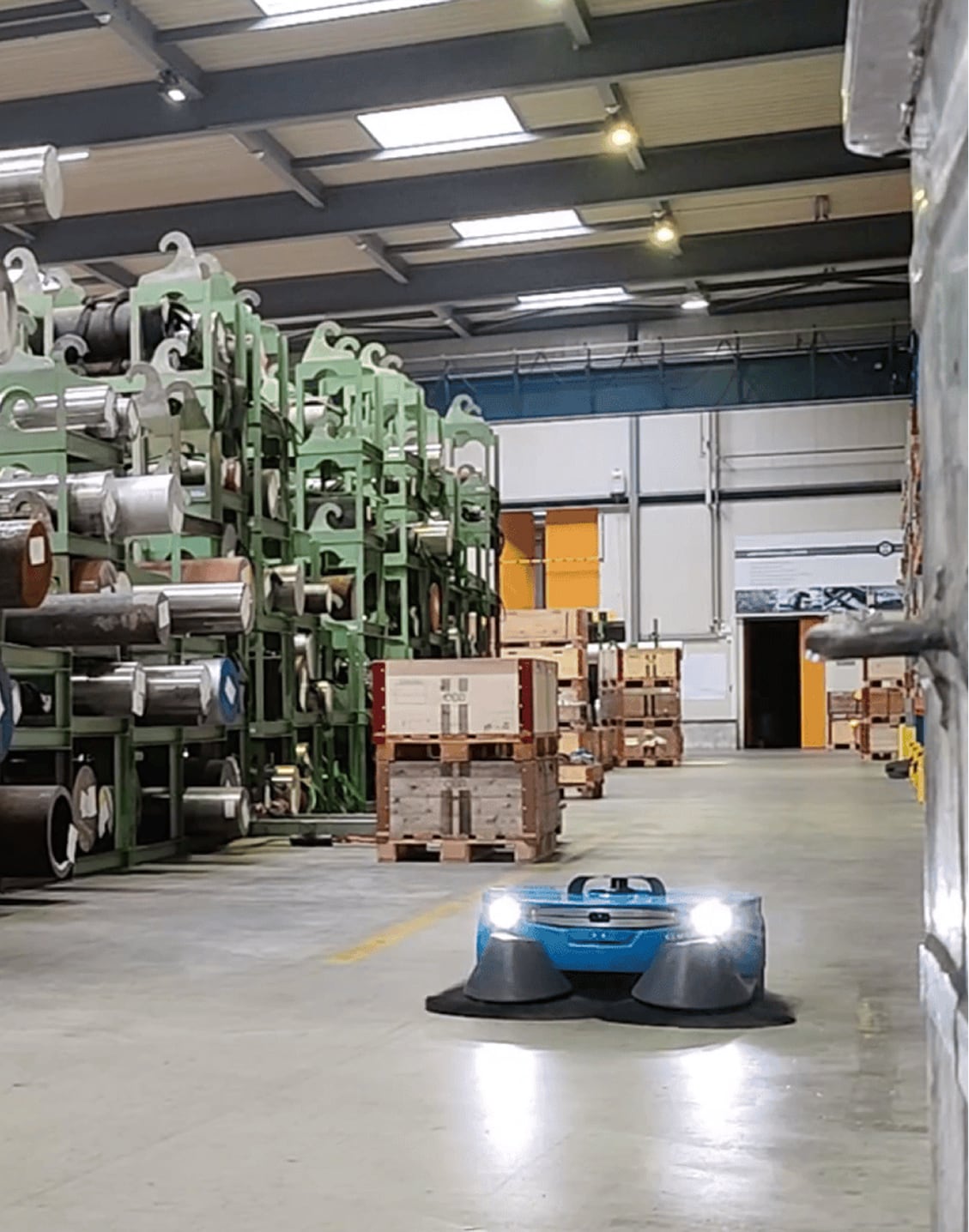
In gypsum and packaging areas, the KEMARO K900 takes over the daily floor pass. It runs mapped routes around board lines, racks and material stacks in quiet hours, and its suction, brushes and filter keep fine dust in the machine rather than in the air.

In silica areas, a HEPA vacuum or wet method is the safer default, and your safety team decides whether a filtered robot qualifies as a low-exposure method. Wet slurry and water from the board line need a scrubber or crew. Related: wood fabrication and bulk storage.

Find the ideal robotic cleaning solution for your production floor

Key features

Up to 1’000m²/h Cleaning performance

Perfect height to clean underneath the racks

Schedule cleaning routes

Intelligent navigation with top of the line LiDAR technology

Autonomous charging

Get started

FAQs

Drywall and plaster processing generates significant amounts of very fine dust. How effectively does the K900 capture this fine particulate matter?

The K900 is equipped with a high-efficiency filtration system specifically designed to capture fine dust particles generated during drywall and plaster processing.

Its powerful suction and specialized brushes ensure thorough collection, minimizing airborne dust and maintaining air quality.

Drywall and plaster processing facilities often have complex layouts with machinery and storage areas. How does the K900 navigate these environments?

The K900 utilizes advanced sensors and mapping technology to navigate complex layouts.

It can autonomously maneuver around machinery, storage racks, and stacks of materials.

It can also be programmed with specific cleaning routes to ensure comprehensive coverage of all critical areas, even in challenging layouts.

How does the K900 contribute to safety and efficiency in a drywall and plaster processing plant?

By consistently removing drywall and plaster dust, the K900 significantly reduces the risk of respiratory issues and fire hazards caused by accumulated combustible dust.

Its thorough cleaning also helps maintain a more organized and efficient workspace, minimizing downtime.

Regular cleaning with the K900 contributes to a safer and healthier working environment, and also helps improve equipment longevity by reducing dust buildup on machinery.